My Daughter Speaks with Thunder

This is a poem dedicated to my daughter Julianna, the girl who says hello to the thunder:


My daughter speaks with thunder,

Letting go of a thousand wishes drawn from her little well,

Lips stirred by the sweeping spells of starlight,

A congregation of electric clouds clapping the chorus,

Humming hymns.


When lightning rips the violet sky,

Like mice scratching faster than traps,

Cheese in cheek,

My child betrays her young lungs with the fragile yell

Of determined humans,

Daring to harmonize with the heavens.


She smiles and dances to me,

The harps in her throat still laughing with song,

When her hands outstretch to unveil

A dozen little berries,

Dizzy from the sugar they’ve drunk,

And I see the glory of this gummy communion,

As my daughter chomps on her backyard treasure,

Barrels her hellos to the evening,

And God the Father belly laughs

A shower of rain in response.

To My Mother on Her Birthday

My mother’s birthday is today, and I wanted to honor her and everything she has done for my family and me by writing this poem for her. Happy birthday, Mom.


I saw her breathing deeply

As I stared through strands of tumbling hair,

Like little wispy veils,

Slurring my sleepy vision as I shivered at her bedside.

I was small and scared and four.


My mother’s sleep lay on her thick as quilts,

Lulling her tired bones to the rest of sacred dreams,

Filled with the iron ballast of a day of boundless worship:

Her living room worn by the hymns of an aged vacuum,

Choruses offered as sacred vespers,

The clouds of sunset filling her temple,

My mother’s domestic liturgy.


I see her hands fold behind her pillow,

Fingers faded by the baptism of dishes,

The scrape of cereal from the bowl and the wisdom of rags

Wiping away the filth of human failures.


Her forehead lightens as her mind replays

The wonders of laughter

And the splattering grace of the evening meal,

Smeared cheeks chewing on the Passover,

Remembrances of a body broken

As my mother’s bends beneath the steam of a swollen oven,

Her electric altar of praise.


My little voice whispers through missing teeth

That the dragon in my room was snarling again,

Its bared fangs aching for the taste of boy,

And I needed her to rescue my wet sheets.


Her eyes half-closed,

Limbs dangling from the strings of endless love,

She stumbles to the linen closet as I anxiously peer through the dark,

Searching for the twin braids of smoke in the shadows of my urine-stained room,

Trusting in the holy strength of my beautiful mother

Whose arms bear the load of a midnight sacrifice

And whose kiss can slay the dragons.

Review: Notes from the Tilt-a-Whirl

Notes From The Tilt-A-Whirl: Wide-Eyed Wonder in God's Spoken WorldNotes From The Tilt-A-Whirl: Wide-Eyed Wonder in God’s Spoken World by N.D. Wilson
My rating: 5 of 5 stars

Well, the apple certainly doesn’t fall far from the tree. Nate’s outlandish work (in the most positive sense) is quite reminiscent of some of his father’s style and metaphorical craftsmanship. Nate is a supremely gifted writer, every page of this wonderland text dripping with poetic imagery. Perhaps the most obvious triumph of these Notes is the way Nate holds the damper pedal for 200 pages, seamlessly sustaining his poetic edge to the end. Incredible endurance.

This work, more like a kaleidoscope than a book, was a breath of glorious air. Actually, more like a gust. Or maybe a cyclone. Possibly, a speeding planet.

View all my reviews

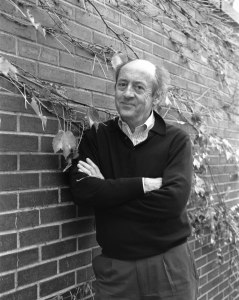
From Kansas to Oz: The Poetic Excursions of Billy Collins

CollinsYes, you must forgive me for making another plug for the poetry of Billy Collins. But seeing as today marks the one-year anniversary of launching Eden.Babel, I find myself musing, like Bilbo Baggins, on the nature of the journeys we take, a reflection Collins often considers in his work.

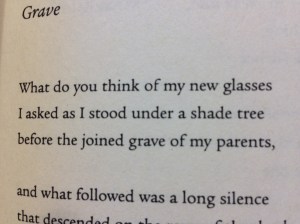
For me, Collins’ is the one poetic voice that has resonated most beautifully concerning the process of sojourning; in the pithy breath of a lyrical phrase, he captures the massive undertakings we begin in the simple acts of ordinary mornings: the epic quest of frying an egg, the poetic brilliance of cleaning a windshield. As I mentioned in a previous post on Collins, someone once gorgeously quipped that his poetry “begins in Kansas and ends in Oz.” This is the majesty of Collins’ work, that the reader can begin the poem introduced to the most mundane of settings, yet find himself struck by the lightning of a startling stanza within seconds. For example, I recently purchased his collection Horoscopes for the Dead, flipped to the first poem, and read these lines:

FullSizeRender

Only Collins can produce this effect. The speaker begins with an utterly casual and unceremonious question (“What do you think of my new glasses?”), moves to an equally casual setting (“I asked as I stood under a shade tree”), then smoothly slides back the curtain to reveal the quiet distress of the grief the speaker bears (“before the joined grave of my parents”). This is the signature movement of Collins, to show his speaker caught between the subtle, almost childlike question for approval – What do you think? – and the bare melancholy of reality. This is the journey from ordinary to extraordinary, mundanity to magic, that makes Collins’ voice a powerhouse for effect and provocative insight. This is the punch of his poetry.

And so, I leave you with the charge to discover Collins for yourself. Brace yourself for the knockout.

Be Thou My Vision: Wordsworth and Seeing into the Life of Things

king-heartsIt is often said that in the land of the blind, the one-eyed man is king. Yet, what must be said of the two-eyed man?

This is the sort of binocular vision afforded to the follower of Christ, the man or woman whose soul has been quickened by the Holy Spirit and, as C.S. Lewis taught us, has been led no longer to look at the sunbeam but to look along it, to track the ray of light, the small coruscation of glory, to the majesty of the sun. Christians have been tasked to navigate this blinded world not with a limping myopia of self-reliance and DIY spirituality but rather with the full vision of God, “For God who said ‘Let light shine out of darkness’ has shone in our hearts to give the light of the knowledge of the glory of God in the face of Jesus Christ” (II Cor. 4:6). Through His death, Christ has torn the veil, allowing all the saints a wide-eyed view of the wonder of Almighty God.

Throughout the Word of God, Christians are constantly invited “further up and further in”, a welcoming call to all who would follow Christ to see Him and all He will do:

Taste and see that the Lord is good” (Psalm 34:8)

Come and see what God has done: he is awesome in his deeds toward the children of man” (Psalm 66:5)

“The Word became flesh and dwelt among us, and we beheld his glory, the glory as of the only begotten of the Father, full of grace and truth” (John 1:14)

Even the great hymnist composed the beautiful lines: “Turn your eyes upon Jesus, look full in His wonderful face”

The Christian, then, has a distinct blessing of vision; as we look to the heavens, we see declared aloud the glory of God (Ps. 19:1). The early 19th century Romantic poet William Wordsworth, in his famous work “Lines Composed a Few Miles Above Tintern Abbey”, effectively demonstrates this sort of Christian vision as he meditates on the sublime beauty of the natural world:

“While with an eye made quiet by the power / Of harmony, and the deep power of joy, / We see into the life of things.”

-William Wordsworth (1770-1850)

This is the depth of Christian experience, what Jonathan Edwards would call a “God-entranced vision of all things.” Through the resurrecting power of God, Christians receive new eyes, new life, washed clean by the blood of the Lamb. With these new eyes of faith, we perform miracles: we see “into the life of things.” No longer are we waylaid by reductive materialism, the false sturdiness of earthly gain, or thin pleasures masquerading as true joy; rather, we see through them to discover the thickness and robustness of God. Remember, Christ’s resurrection body could pass through walls not because it was ghostly or wispy but, perhaps, because our material world is thin and feathery compared to the rich thickness of God.

And so, we must learn to see into the life of things, to track the sunbeam to the sun, to see the great abundance of the pleasure of God in and through the things He has made. As Doug Wilson suggests, we ought to “turn the soup into stew” and thank God for the freedom to see Him, for “we all, with unveiled face, beholding the glory of the Lord, are being transformed into the same image from one degree of glory to another” (II Cor. 3:18).

The God of Great Feasting (The Joy of the Lord Is Our Strength)

full_cropped_LOTR---The-Return-of-the-King-471In an age of rampant cynicism, intense narcissism, and deep defiance toward absolutes such as truth, goodness, and beauty, the ache for passionate and rich festivity must burn ever more feverishly in our hearts. This sour world, lost in the mirrors of its vanity and drowning in the white noise of feeds, posts, snaps, and late-night binges, is in dire need of a good feast, what Tolkien saw as an evening by the fire, filled with boisterous laughter and great dancing. Or, as Lewis saw, what greater way to herald the breaking of winter than the carousing of creatures at the coming of spring? The promise of resurrection is a great promise, full and strong, breaking like the tide against this screen-drunk land.

I am fond of saying Christians, by definition, ought to be the most celebratory, revelrous, festive, merry, jubilant, glorious, and passionate beings on Earth, for we are little Christs, microcosms of the cosmos-Creator. We are followers of the Maker of laughter, the Author of baby-babble, the Sculptor of forestry, and the Inventor of the taste of s’mores. We are disciples of the One who ringed Saturn, spoke light, and lulled the raging seas. We serve the God who made music and poetry, and as we behold His glory, we “are being transformed into the same image from one degree of glory to another” (II Cor. 3:18). As we become more and more like our wondrous Creator, the world ought to see us laugh as He laughs, forgive as He forgives, dance and sing and shout. He is the prodigal Father, excessive and exuberant in His splendor. Indeed, as His cup overflowed with His grace, so must our cups overflow with His praise, held high in joyful cheer and strong power.

The psalmist declares, “You have put more joy in my heart than they have when their grain and wine abound” (Ps. 4:7)

—“Taste and see that the Lord is good” (Ps. 34:8).

—“Awake, my glory! Awake, O harp and lyre! I will awake the dawn! I will give thanks to you, O Lord, among the peoples; I will sing praises to you among the nations” (Ps. 57:8-9).

In Isaiah, “Listen diligently to me, and eat what is good, and delight yourselves in rich food” (Is. 55:2)

In Ecclesiastes, “Go, eat your bread with joy, and drink your wine with a merry heart, for God has already approved what you do. Enjoy life with the wife whom you love” (Eccl. 9:7, 9).

In Romans, “Do not be overcome by evil, but overcome evil with good” (Rom. 12:21).

In Thessalonians, “Rejoice evermore” (I Thess. 5:16).

And from Nehemiah, “Go your way. Eat the fat and drink sweet wine and send portions to anyone who has nothing ready, for this day is holy to our Lord. And do not be grieved, for the joy of the Lord is your strength.”

Review: Sailing Alone Around the Room

Sailing Alone Around the Room: New and Selected PoemsSailing Alone Around the Room: New and Selected Poems by Billy Collins
My rating: 5 of 5 stars

I spent the last year-and-one-day chipping away at this collection, and it has been such a marvelous experience. Collins is simply a master and has become, above all, my favorite poet.

Someone once said of Collins’ poems: “You begin in Kansas; you end in Oz.” This description rings powerfully true. Collins has an unparalleled ability to begin a poem with a simple image – a dog breathing, a man chopping wood, a window – and, by the end, wringing your heart with staggering depth.

Here’s to many, many more readings of the great Billy Collins. I highly recommend him.

View all my reviews

William Blake and the God of Good Marriages

wedding-ringsWilliam Blake (1757-1827) was a world-class poet and artist in England whose deceptively simple verses, though they did not resonate loudly in his own time, have served in recent years as shining examples of Romantic poetry in Britain during the time of the French Revolution right across the channel. Two particular publications of his, Songs of Innocence (1789) and Songs of Experience (1794), represent what he termed the “contrary states of the human soul”, that is, the divide between the light and the dark that permeates each human heart. Blake was fascinated with the transition from innocence to experience, that elusive process of shedding childhood and donning adulthood, of seeing the sunlight of day set into the mystery of night.

For Blake, something seemed inevitably lost in the move from purity to worldly knowledge. In his poetry, he often ponders the divine, pure, and perhaps even godly innocence of a child and its painful peeling away as he or she becomes more sophisticated, cultured, educated, and experienced. He considers the grinding corrosiveness of city life (as it was flooded by scores of people drawn to the burgeoning, industrialized London) in stark contrast to the Edenic majesty of the countryside; it was a reminder to him of the unfortunate degeneration of aging against the lily-white innocence of a wild childhood in the fields. In short, Blake fixed his focus on the corrupting influence that growing up seems to have on the human experience.

So it is without wonder that one of his short pieces titled “My Pretty Rose Tree” exposes Blake’s nervousness and fear towards marriage as the poem examines the speaker’s attempt to preserve its sanctity and unity. Here’s the text:

A flower was offer’d to me,

Such a flower as May never bore;

But I said “I’ve a Pretty Rose-tree,”

And I passed the sweet flower o’er.


Then I went to my Pretty Rose-tree,

To tend her by day and by night;

But my Rose turn’d away with jealousy,

And her thorns were my only delight.

The poem is rather simple: the speaker resists the temptation to abandon his wife for another woman only to discover his wife turning away from him out of jealousy, leaving him in a state of despondency and loneliness.

Blake accomplishes many things in the course of this brief verse. It’s notable his central setting is the pastoral landscape (a favorite for Blake) in which discussions of innocence averting temptation take on symbolic meaning through flowers and rose-trees. One can even see the primal example of sinful enticement from the serpent in Genesis 3 evoked in the sweetness of the offered flower.

But the full power of the poem is its ironic turn in line 7. The reader seems to expect the speaker will be rewarded for his fidelity, that the Rose-tree will embrace her champion for resisting the lure. Yet, that is not Blake’s aim, and that is not his conclusion. So what are we to make of this sorrowful ending? What is Blake getting at?

The lonely, dejected condition of the speaker in the final line is a result of his attempt to create a good marriage on his own merits. He desires acceptance, praise, and devotion from his “Rose-tree” for having courageously and adamantly refused a sinful offer. Look how good I am at resisting temptation, he seems to say as he returns to his tree to “tend her by day and by night.” I have been so careful, so loyal, so good.

Such conceit and self-assurance, however, is not what produces strong, faithful marriages. No husband can hope to serve his wife and tend her well if he is looking to his own strength and grit-teeth commitment for validation. The problem of Blake’s poem – why does the rose-tree reject the speaker when he decidedly “passed the flower o’er”? – cannot be answered by human effort. Only God can bind a man and a woman together. It is not within human reason, imagination, will, or power to create or sustain a marriage. Only God can forge the two to become one flesh, and “what God has joined together, let no man tear asunder.”

So Blake’s poem concludes on a painfully tinny, ringing chord, unresolved. The speaker who had hoped his good work had earned a happy marriage is left confused, alone, and nestled knee-deep in thorns, and I cannot help but wonder how many of our marriages end on the same sour note. But I did everything I was supposed to do, the wife mutters. But I never cheated on her, not even once, the husband rants. I followed all the rules, did everything right, cooked and cleaned, provided for and protected…Why is my marriage in such ruins?

The quiet answer to these questions lies only in the God of good marriages. He is the author of all things good. God is Love, and our expressions of love to each other can only be completed in and through His indefinable grace. We cannot earn a good marriage. We can only look to Christ as the center of all things and pray He sustains our union through both the sorrows and the splendor. Remember, we may have excitedly slid rings on each other’s fingers, but only God can keep them there.

Created to Create

The following is an article I wrote on creativity in writing and Christian education originally published on Landmark Christian School’s blog.


old typewriter (focus on text)In Ephesians 5:1, Paul instructs his fellow believers to “be imitators of God as dearly loved children.” Therefore, as followers of Christ and His Word, our first duty in following this command must be to determine, “Well, what is God like?” In opening the Bible, then, to discover the character of God through His revelation in Scripture, we should note the first description we stumble upon: “In the beginning, God created…”

The human capacity for creativity, wonder, and imagination is not only a gift from God to bring Him glory through wholehearted expression and majestic praise but also a mandate; just as the Creator was creative in the design of all things, so must His creation be creative as a way of magnifying Christ through imitating God. When God fashioned Adam from little turrets of dirt and the swirling breath of life, He was not merely stirring human history into existence; He was training us in the way we should perpetuate human history. God, the Grand Storyteller, taught His characters how to tell stories. God revealed the essence of His divinity by sparking divinity in our first family and threading that divinity through thousands of years of plot. When we thus breathe life into the skin of our own protagonists and bid them walk among us in our fictions, when we strain courageously to perfect our poetic effort, when we sing glorious harmonies of praise in reverberating cathedrals, we come as close to the wild invention of God as our finitude allows. We press toward godliness. We imitate God.

This truth is compounded as Paul exhorts us in another letter that “we are God’s workmanship, created in Christ Jesus for good works” (Eph. 2:10). It is notable that the Greek word rendered as “workmanship” here in Ephesians is poiema, from which we can clearly see our English word poem. So, we are, quite truly, the poetry of God, created in the loving care of a master wordsmith. We are a robust, abundant, vibrant kaleidoscope of God’s artistic pleasure, penned with brilliant passion, and when He “saw all that He had made, [He declared] it was very good” (Gen. 1:31, emphasis added).

So, since the poetry and creativity of God is rich and imaginative, we must see that the education of our next generation is not simply a means of hardwiring them for social contribution but a full-throated movement to awaken their wonder, to intensify their desire for truth, goodness, and beauty and, from that desire, to pursue creatively the worship of a glorious God. We must train our students to express themselves well, to write with passion and authority, but, more importantly, we must teach them to approach their individual calling, whatever it may be, with godly creativity – that, whatever they do, they do it with all their heart unto the Lord (Col. 3:23). We cannot be in the business of piling young people onto the conveyer belt to college, cookie-cutting them into monochrome caricatures of human beings. They are the living, breathing poetry of God, descendants of the very dust and bone of Eden, with voices and diverse passions. By teaching them to think creatively not only in a Creative Writing elective but also in math, science, physical fitness, history, and athletics, we are raising them to imitate God in all His multifaceted character.

As educators, we recognize not every student is called to a writing career. However, the world needs businessmen and bakers, mechanics and managers, and my prayer is that we provide it with Christian graduates that, like Daniel, rise to the top of their field for the excellent spirit within them. But the world certainly cannot bear the weight of any more graduates who shuffle through life bored and half-asleep. As Douglas Wilson once quipped, we cannot live in a world where “the bland lead the bland.” Creative thinking and creative writing are essential tools not only to our scholarship but to our souls. Creativity is the signature of God on the well-rounded human being, fully equipped to navigate a broken and creaking world with the fire of a full imagination.

May we all learn to “taste and see that the Lord is good” (Ps. 34:8). May we raise (and be) a generation that sees the glory of God in all things, that creatively expresses His praise in every word with plenty of color and sonorous splendor. May we truly absorb the words of John Piper:

 “[W]hen a person speaks or writes or sings or paints about breathtaking truth in a boring way, it is probably a sin. The supremacy of God in the life of the mind is not honored when God and his amazing world are observed truly, analyzed duly, and communicated boringly. Imagination is the key to killing boredom. We must imagine ways to say truth for what it really is. And it is not boring. God’s world – all of it – rings with wonders. The imagination calls up new words, new images, new analogies, new metaphors, new illustrations, new connections to say old, glorious truth. Imagination is the faculty of the mind that God has given us to make the communication of his beauty beautiful.”

The Past Tense in Our Present Time

cross-shadow-kerepesiAs an English teacher, I often instruct my students to discuss the characters and actions in whatever work we are studying by using the present tense. For instance, Hamlet contemplates death as he faces Yorick’s empty skull, Beowulf aspires toward a sense of eternal glory as he wrenches Grendel’s arm off, and Gatsby stretches ever farther for that ephemeral green light on Daisy’s dock. I remind them that the literary present tense preserves the immediacy and continuous action of the narrative upon each individual reading; these characters, in a sense, are always contemplating, aspiring, stretching every time we open the book.

By extension, we often consider ourselves to be winding our way through an eternal present; even now, I am typing, and you are reading. We seem to be quite smitten by the present tense. As American poet Henry Wadsworth Longfellow put it:

Not enjoyment, and not sorrow,

Is our destined end or way;

But to act, that each to-morrow

Find us farther than to-day

We seem to believe that our present action is the fulcrum on which our entire life is balanced, and, in a way, this is true; our choices have consequences, and our actions have reactions.

Yet, perhaps even more true is the asphalt-solid reality of the past tense. What if we must look to the past for that fulcrum? What if our most important reality is behind us?

Throughout the New Testament, God calls us to live a life of calm assurance and steady footing based not on our present circumstances or the sheer potency of our daily choices but on the power of a work He has already accomplished. In II Corinthians, Paul discusses the transformative power of salvation, concluding:

All this is from God, who through Christ has reconciled us to himself and gave us the ministry of reconciliation […] We implore you on behalf of Christ, be reconciled to God. For our sake he made him to be sin who knew no sin, so that in him we might become the righteousness of God” (II Cor. 5:18, 20-21).

Notice the verbs. Christ “has reconciled” (past tense) us to himself, and, on that basis, we must “be reconciled” (present tense) to God. What God has done allows us to be what we must be. He made (past) him to be sin, so that in him we might become (present) the righteousness of God.

In his letter to the Colossians, Paul makes a similar case:

And you, who once were alienated and hostile in mind, doing evil deeds, he has now reconciled in his body of flesh by his death, in order to present you holy and blameless and above reproach before him” (Col. 1:21-22).

The reconciliation necessary to make us worthy of welcome into God’s family has already happened. “Take heart,” Jesus says, “for I have overcome the world” (John 16:33). He is the LORD, and He has done it. For all your anguish, your waiting, your grieving, your anxiety, your frustration, your tedious repetition, your feelings of insignificance, your worry, and your regret, God has assured you that He has made all things new. He has reconciled us to Him; He has fought the good fight; He has defeated death and all of his friends.

There is no more glorious truth than the triumphant whisper on our Savior’s lips: “It is finished.”

Therefore, be reconciled to Him. Align your heart to the truth that has already been accomplished. He has reconciled the world to himself, so be reconciled! Trust the King; He is good! Be done with your nail-biting, your heavy shoulders, your saddened eyes. Sin is unraveling, and the glory of the LORD is filling every pore of this universe. Everything sad is coming untrue.

Rejoice evermore.