On Endings and Beginnings

T.S. Eliot once famously wrote, “In my end is my beginning,” a hauntingly lyrical and poignant claim on the glorious chapters of our story, the endless death-and-resurrection pattern of our lives. We move from day to night, spring to winter, orientation to graduation, birth to death…to rebirth.

Yesterday was my last day with my seniors, as they don the cap-and-gown and prepare to graduate into this busy world with the wealth of their dreams and plans excitedly following them like a beautiful comet’s tail or a squeaky red wagon obeying their urgent lead . As such, it seems inevitable to think on endings, both big and small, with a note of sadness, for it is certainly a grief to say goodbye to anything, no less a collection of wide-eyed teenagers ready to grab the world. 

And so, I dug into the recesses of writings past and unearthed an article I wrote ca. 2009 as I prepared to graduate from college. May our endings only ever serve as calls to see beginnings; may we learn, in all of our many evenings, to eagerly await the dawn.


2812548241_53fe9e959d_bThe inescapable truth of life is in its ending. By no means do I wish to sound morose or despondent, but it is the truth nonetheless. Part of the universal human experience is aging, the bittersweet feel of birthday after birthday as we watch that person in the mirror change on us. With every passing moment, we are collectively growing older. Unfortunately, Barrie’s play is fictional, and Neverland will always be just a little farther past our fingertips.

So how do most of us handle this? We discover how simple it is to reduce our life simply to what we tell strangers – “What’s your name?” “Where do you work?” “When do you graduate?” “Are you dating?” Whereas the answers to these numbing questions are important, they cannot become the identities that make up our life. The beauty of life is in the process, the things we embrace to get us from one photo album to another. Anyone can hold on to the big moments – graduation, promotion, championship, engagement – but the gift of life is so much larger. It has to be.

I often laugh at myself for relaying my goals and ambitions to people in the form of a personal bucket list, a seventy-year checklist of dreams. Though that isn’t necessarily a bad thing, what I fail to realize is the extreme importance of those seemingly little moments: that night I couldn’t fall asleep or the time my best friend made me laugh so hard I choked on something. But the best part of these “everyday” moments is the surprise of God. Somehow we expect that God’s presence is at an all-time high during our celebrity moments, the times we feel exceptionally accomplished. We are tempted to believe that He is to thank when we feel great, and He is absent when we do not. But this is wonderfully wrong. Life is a race that we are ever finishing at a pace that is always uncomfortably fast. It’s easy to tell ourselves where we’re running, but the how is where we get caught. God is always willing to guide us through each big moment in our life, but the “everyday” is God’s playground for miracles, His behind-the-scenes workshop.

Of course the trophies, the diplomas, and the diamond rings are enormous moments to be excited about, but we should never lose the music, the midnight drives, and the out-loud prayers. We should never attempt to escape the everyday moments by way of that second star to the right; rather, we should learn to find the adventure in the little things. Of course, the daily process of life can be painful and overwhelming, but even if at times we feel it’s in circles, we should always keep running.

The God of Great Feasting (The Joy of the Lord Is Our Strength)

full_cropped_LOTR---The-Return-of-the-King-471In an age of rampant cynicism, intense narcissism, and deep defiance toward absolutes such as truth, goodness, and beauty, the ache for passionate and rich festivity must burn ever more feverishly in our hearts. This sour world, lost in the mirrors of its vanity and drowning in the white noise of feeds, posts, snaps, and late-night binges, is in dire need of a good feast, what Tolkien saw as an evening by the fire, filled with boisterous laughter and great dancing. Or, as Lewis saw, what greater way to herald the breaking of winter than the carousing of creatures at the coming of spring? The promise of resurrection is a great promise, full and strong, breaking like the tide against this screen-drunk land.

I am fond of saying Christians, by definition, ought to be the most celebratory, revelrous, festive, merry, jubilant, glorious, and passionate beings on Earth, for we are little Christs, microcosms of the cosmos-Creator. We are followers of the Maker of laughter, the Author of baby-babble, the Sculptor of forestry, and the Inventor of the taste of s’mores. We are disciples of the One who ringed Saturn, spoke light, and lulled the raging seas. We serve the God who made music and poetry, and as we behold His glory, we “are being transformed into the same image from one degree of glory to another” (II Cor. 3:18). As we become more and more like our wondrous Creator, the world ought to see us laugh as He laughs, forgive as He forgives, dance and sing and shout. He is the prodigal Father, excessive and exuberant in His splendor. Indeed, as His cup overflowed with His grace, so must our cups overflow with His praise, held high in joyful cheer and strong power.

The psalmist declares, “You have put more joy in my heart than they have when their grain and wine abound” (Ps. 4:7)

—“Taste and see that the Lord is good” (Ps. 34:8).

—“Awake, my glory! Awake, O harp and lyre! I will awake the dawn! I will give thanks to you, O Lord, among the peoples; I will sing praises to you among the nations” (Ps. 57:8-9).

In Isaiah, “Listen diligently to me, and eat what is good, and delight yourselves in rich food” (Is. 55:2)

In Ecclesiastes, “Go, eat your bread with joy, and drink your wine with a merry heart, for God has already approved what you do. Enjoy life with the wife whom you love” (Eccl. 9:7, 9).

In Romans, “Do not be overcome by evil, but overcome evil with good” (Rom. 12:21).

In Thessalonians, “Rejoice evermore” (I Thess. 5:16).

And from Nehemiah, “Go your way. Eat the fat and drink sweet wine and send portions to anyone who has nothing ready, for this day is holy to our Lord. And do not be grieved, for the joy of the Lord is your strength.”

3 Classics that Preach the Gospel

pile-de-livres-e1418392637859As my classes this year begin to wind down, I find myself making frequent glances in the rearview mirror, looking back at all the worlds I have led my students through. From the electric streetlights of New York to the vast acreage of the Russian countryside, from the courts of Denmark to the Paris Opera House, the wintry streets of Victorian London to the cramped apartment of a desperate salesman*, I am taken aback by the sheer beauty and splendor afforded in the simple pleasure of reading books.
One particular glory, and perhaps the preeminent one, is the power stories have to speak the truth. As someone once said, fiction is “the lie that tells the truth,” and so, I’d like to share three classic works of fiction that, I contend, edify and encourage the believer through their depiction of the Great Story that God is telling. These are simply a small handful of works that reveal, in some measure, either in their portrayal of man’s tragedy or his redemption, the awesome wonder of the Gospel of Jesus Christ.

  1. Silas Marner by George Eliot

Falsely accused and abandoned by both his fiancee and his best friend, the weaver Silas Marner’s most grievous despair comes from the loss of his faith in the process. God, it would seem, has also withdrawn, leaving him desperate and alone in a home that has lost all familiarity, all comfort. So Silas retreats from his beloved old life and further into the darkened caverns of his battered heart.

Yet, in true form, all is not lost, for God, the beloved Father, has never left Silas Marner’s side. As the weaver burrows himself deeper in his gloom, God sends a wandering, helpless child through his door, toddling her way to the warm fire. As the novel progresses, Silas must learn to father little Eppie and raise her to love and care in a world lacking such virtues. A beautiful work of loss and redemption, sadness and joy, Silas Marner shows us the goodness of a sovereign God who designs all things, both sorrow and gladness, to His fullest glory.

2. Great Expectations by Charles Dickens

Pip, the poor orphan boy raised “by hand” by an abusive sister, lives on the scraps and meager margins of life. Opening the novel alone in his parents’ graveyard, Pip suddenly finds himself on the receiving end of death threats from a hardened, terrifying convict, demanding food and a file to free his chains. Yet, though Pip has nothing of a future ahead of him, he dreams of a life in London, the top hats and cobblestone streets, the theater and the busy coaches. In short, Pip dreams of being a somebody.  And so, when a mysterious benefactor sends him an inexplicably magnificent fortune, granting Pip the impossible opportunity to attain his expectations, Pip is ecstatic.

But, as Pip finds, not all that glitters is gold. Throughout Pip’s experience in the city, he must, both literally and figuratively, wave the fog and chimney mist from his eyes, constantly wiping away the crumbling illusions of his makeshift fantasies. The world, Pip discovers, is greedier, crueler, dirtier, and lonelier than he had imagined. What remains for Pip, then, is to watch his worldly ambitions fade to nothing only to discover the true joy and grace that had been beckoning to him all along. Considered by many to be Dickens’ masterpiece, Great Expectations guides its reader from the warmth of home to the prodigal “far country” and, thankfully, back again with the spiritual richness and stylistic aplomb typical of Dickensian fiction.

3. Frankenstein by Mary Shelley

At once both Gothic thriller and philosophical discourse, Frankenstein perhaps is one of the more misrepresented works of Romantic literature. Dr. Victor Frankenstein is obsessed with scientific exploration and daring feats of progress, namely, the discovery of reanimation and the source of life. Written in the short wake of Galvani’s work with electricity, Shelley’s novel examines the ethical, social, and religious implications of playing God as Frankenstein assembles a motley cadaver from dead men’s limbs and surges it to life. Yet, the creature he thought would bring him worldwide renown and adoration in the scientific community turns out to be a harrowing monster, eight feet tall and more powerful than Frankenstein had ever dreamed. What follows is a cat-and-mouse pursuit as Frankenstein runs from his creature and, ultimately, the consequences of his deeds.

The true beauty of this novel, however, lies in the way Shelley provokes sympathy for the monster. In her world, this creature becomes a being that longs to know its telos, its purpose, in this hostile and chaotic world. The monster, in this sense, is transformed into a type of Adam, created and designed by an expert hand, as he subsequently roams western Europe in search of his maker. Perhaps the most climactic and stirring moment occurs when Frankenstein and his monster meet atop Mount Blanc, embodying the classic , almost mythical confrontation between creature and creator. In this sequence, the monster finally interrogates Frankenstein, begging him to accept him, love him, and explain his purpose for being. Yet, for all his earnest pleading, the monster receives no kindness in turn as Frankenstein berates and abandons him, damning him to his alienated and miserable state alone and confused.

As awful as Frankenstein treats his creature, the story awakens the reader’s heart to the contrary opportunity we all have in addressing our own Maker. Unlike Frankenstein, He will never spurn us with disgust; rather, we serve a good Father who made us in His living image, not from the rotted, corroding skin of death. In this way, Frankenstein shows us the inadequacy of humanism compared to the lovingkindness of a sovereign God. We, as it turns out, make lousy gods.


*These works are The Great Gatsby, The Seagull, Hamlet, The Phantom of the Opera, Great Expectations, and The Metamorphosis.

Review: Sailing Alone Around the Room

Sailing Alone Around the Room: New and Selected PoemsSailing Alone Around the Room: New and Selected Poems by Billy Collins
My rating: 5 of 5 stars

I spent the last year-and-one-day chipping away at this collection, and it has been such a marvelous experience. Collins is simply a master and has become, above all, my favorite poet.

Someone once said of Collins’ poems: “You begin in Kansas; you end in Oz.” This description rings powerfully true. Collins has an unparalleled ability to begin a poem with a simple image – a dog breathing, a man chopping wood, a window – and, by the end, wringing your heart with staggering depth.

Here’s to many, many more readings of the great Billy Collins. I highly recommend him.

View all my reviews

“She’s Wonderful!”

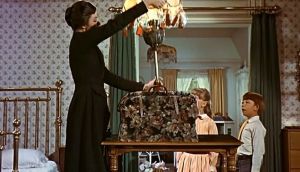
83c2f10655cbee2174dd0a444fc0048eI am sure with a recent post of mine from last November riffing off a scene from Mary Poppins, many of you may be thinking a second one would simply be milking it.

Well, here goes.

First, Mary Poppins may very well hold the top seat in my list of favorite movies. It is one of the most finely crafted films I’ve seen, certainly Disney’s best. Mixing pathos, charm, depth, and the right sort of Dickensian atmosphere (though the film is set in 1910) with Dick van Dyke and Julie Andrews at the helm is simply remarkable. Add to that a medley of film’s most iconic moments (tea parties on the ceiling, jumping through chalk pavement pictures, merry-go-round horses in the derby, the bird woman at St. Paul’s) and best lines (“Posts, everyone!”, “Kindly do not cloud the issue with facts”,  “A wooden leg named Smith”) and you’ve got the makings of a masterpiece. Mary Poppins is the film that is at once both familiar and new, timeless and exciting. It is the only film I know of that allows its audience to feel like Mr. Banks and Michael Banks simultaneously – to be steeped in the wildness of childhood and burdened by the cages of adulthood in the course of two hours. It is a charming and delightfully fresh world that we have somehow always known.

One scene in particular has struck me recently as I have been watching it with my girls over the past few weeks. As Mary Poppins arrives at 17 Cherry Tree Lane and makes her way through the nursery, Jane and Michael spot her rather cumbersome carpetbag (“You mean to carry carpets in?” “No. Made of.”). Yet, as she places the bag on the table and begins to unpack, the children are bewildered by what lies inside. Though neither Jane nor Michael can see anything in the bag, Mary Poppins pulls out a mirror, a floor lamp, several articles of clothing, and her famous tape measure.

It’s quick and subtle, but Jane and Michael have a short exchange that is, in its own way, quite revealing:

Michael: “We better keep an eye on this one. She’s tricky.”

Jane: “She’s wonderful!”

In this moment, I can’t help thinking if their response to Mary Poppins is the same sort of response the world has to the miraculous glory of Christ. Many may look at the gospels, hear accounts of healings and resurrections, and come to the same conclusion. This man is tricky, claiming to be the Messiah. He’s a charlatan, an illusionist, a sorcerer, a mere carnival barker if anything at all.

We better keep an eye on this one.

Surely no one can take seriously stories of a Jew walking on water, calming storms, and raising the dead. It’s a trick that the Pharisees and other Jews kept an eye on, even to His death.

Yet, there was a remnant that believed Jesus was not tricky, but wonderful. Though they (and I) cannot explain how He accomplished all that He did, the beauty of Jane’s response is the beauty of childlike faith. She did not have to figure Mary Poppins out. She did not belittle her position by assuming she was devious or false. She simply chose to submit herself to the enchantment of a charming mystery.

And so must we. It is not for us to “keep an eye on” God. We must simply open ourselves to the grand delight of a God who has come to fix everything, regardless of whether or not we can explain how He did it. As Jesus said in Matthew 18:3,

Truly, I say to you, unless you turn and become like children, you will never enter the kingdom of heaven.

In their own way, Jane, Michael, and even Mr. Banks needed a nanny to swoop down from the clouds and fix all their chaos with a spoonful of sugar, someone to “turn bread and water into tea and cakes”, and in a very meaningful way, so do we. What’s more is that we, like the Banks children, must decide whether this savior is evil or good, wrong or right, tricky or wonderful.

I side with Jane.


Scrooge, Marner, and the Lethal Love of Money

IMG_2417In Charles Dickens’ near-perfect novella A Christmas Carol, the iconic miser Ebenezer Scrooge endures a painful series of journeys to the past, present, and future to discover the depths of his selfishness and to redeem his crooked heart. Among his famous visits to Mr. Fezziwig’s party, the Cratchit house, and his own grave, one scene in particular is quite moving. As the Ghost of Christmas Past reveals to Scrooge a number of scenes of his boyhood and younger years, a vision of his potential, yet ultimately unrealized marriage to Belle appears, causing Scrooge to beg the Ghost to “show [him] no more!” In this episode, Belle pleads with the younger Scrooge to remember his former love and affection toward her, feelings which had grown cold over time as his piles of gold rose ever higher:

“It matters little,” she said softly. “To you, very little. Another idol has displaced me; and if it can cheer and comfort you in time to come, as I would have tried to do, I have no just cause to grieve.”

“What Idol has displaced you!” he rejoined.

“A golden one.”

For Scrooge, his obsession with his “master-passion, Gain” through the pursuit of money clouds out the real warmth of a woman who loved him dearly.

Similarly, in George Eliot’s 1861 novel Silas Marner, we see another instance where money-chasing leads to destruction. Upon his exile from Lantern Yard following false charges of theft, the weaver Marner winds up a stranger in Raveloe where he stays alone in his cottage on the fringes of town and hoards his income beneath his floorboards. Like Scrooge, Marner’s soul becomes intimately connected with his wealth as he sits alone at his table in the company of gold coins:

“The light of his faith quite put out, and his affections made desolate, he had clung with all the force of his nature to his work and his money; and like all objects to which a man devotes himself, they had fashioned him into correspondence with themselves. […] His gold, as he hung over it and saw it grow, gathered his power of loving together into a hard isolation like its own.”

For both Scrooge and Marner, their stacks of gold became surrogates for the people they once loved, standing in for fiancees (Belle and Sarah, respectively) they lost long ago. Their love of money, an all-consuming obsession, serves as a coping mechanism for fear, loneliness, and, most of all, purposelessness. Wishing to discover a sense of significance and identity, they resort to chasing money in hopes to find security, control, and assurance that they will never be hurt again. As Jim Carrey famously quipped at the Golden Globe awards, they were on a “terrible search” for joy and satisfaction.

Yet, money-chasing can never provide genuine rest. The quota mentality remains a stubborn factor: How much money must one have to be happy? When will enough be enough?

While the first half of Paul’s statement to Timothy that “the love of money is the root of all evil”is more famous, it is the last half of the verse that is most striking. See the full verse:

“For the love of money is the root of all evil: which while some coveted after, they have erred from the faith, and pierced themselves through with many sorrows.” (KJV, emphasis added)

Paul notes that money-chasing is not only a poisonous root to further evils but also an invitation for many sorrows to pierce the heart. In other words, the pursuit of money for its own sake is a confident step directly into enemy fire, an intentional upward look at a shower of arrows, barechested and shieldless. The love of money is lethal, a greed and discontentment that festers and rots until the heart is brought to ruin. It drives people away from any sort of need for faith or trust, tempting them to see their own wealth as a mighty fortress. Ironically, our currency is right: In God we certainly trust. I just wonder if that god is the piece of paper we’re holding.

So our only hope is to release our clinched fists and let our dollars go because palms that are freed from the grip of gold are free to be given grace.

William Blake and the God of Good Marriages

wedding-ringsWilliam Blake (1757-1827) was a world-class poet and artist in England whose deceptively simple verses, though they did not resonate loudly in his own time, have served in recent years as shining examples of Romantic poetry in Britain during the time of the French Revolution right across the channel. Two particular publications of his, Songs of Innocence (1789) and Songs of Experience (1794), represent what he termed the “contrary states of the human soul”, that is, the divide between the light and the dark that permeates each human heart. Blake was fascinated with the transition from innocence to experience, that elusive process of shedding childhood and donning adulthood, of seeing the sunlight of day set into the mystery of night.

For Blake, something seemed inevitably lost in the move from purity to worldly knowledge. In his poetry, he often ponders the divine, pure, and perhaps even godly innocence of a child and its painful peeling away as he or she becomes more sophisticated, cultured, educated, and experienced. He considers the grinding corrosiveness of city life (as it was flooded by scores of people drawn to the burgeoning, industrialized London) in stark contrast to the Edenic majesty of the countryside; it was a reminder to him of the unfortunate degeneration of aging against the lily-white innocence of a wild childhood in the fields. In short, Blake fixed his focus on the corrupting influence that growing up seems to have on the human experience.

So it is without wonder that one of his short pieces titled “My Pretty Rose Tree” exposes Blake’s nervousness and fear towards marriage as the poem examines the speaker’s attempt to preserve its sanctity and unity. Here’s the text:

A flower was offer’d to me,

Such a flower as May never bore;

But I said “I’ve a Pretty Rose-tree,”

And I passed the sweet flower o’er.


Then I went to my Pretty Rose-tree,

To tend her by day and by night;

But my Rose turn’d away with jealousy,

And her thorns were my only delight.

The poem is rather simple: the speaker resists the temptation to abandon his wife for another woman only to discover his wife turning away from him out of jealousy, leaving him in a state of despondency and loneliness.

Blake accomplishes many things in the course of this brief verse. It’s notable his central setting is the pastoral landscape (a favorite for Blake) in which discussions of innocence averting temptation take on symbolic meaning through flowers and rose-trees. One can even see the primal example of sinful enticement from the serpent in Genesis 3 evoked in the sweetness of the offered flower.

But the full power of the poem is its ironic turn in line 7. The reader seems to expect the speaker will be rewarded for his fidelity, that the Rose-tree will embrace her champion for resisting the lure. Yet, that is not Blake’s aim, and that is not his conclusion. So what are we to make of this sorrowful ending? What is Blake getting at?

The lonely, dejected condition of the speaker in the final line is a result of his attempt to create a good marriage on his own merits. He desires acceptance, praise, and devotion from his “Rose-tree” for having courageously and adamantly refused a sinful offer. Look how good I am at resisting temptation, he seems to say as he returns to his tree to “tend her by day and by night.” I have been so careful, so loyal, so good.

Such conceit and self-assurance, however, is not what produces strong, faithful marriages. No husband can hope to serve his wife and tend her well if he is looking to his own strength and grit-teeth commitment for validation. The problem of Blake’s poem – why does the rose-tree reject the speaker when he decidedly “passed the flower o’er”? – cannot be answered by human effort. Only God can bind a man and a woman together. It is not within human reason, imagination, will, or power to create or sustain a marriage. Only God can forge the two to become one flesh, and “what God has joined together, let no man tear asunder.”

So Blake’s poem concludes on a painfully tinny, ringing chord, unresolved. The speaker who had hoped his good work had earned a happy marriage is left confused, alone, and nestled knee-deep in thorns, and I cannot help but wonder how many of our marriages end on the same sour note. But I did everything I was supposed to do, the wife mutters. But I never cheated on her, not even once, the husband rants. I followed all the rules, did everything right, cooked and cleaned, provided for and protected…Why is my marriage in such ruins?

The quiet answer to these questions lies only in the God of good marriages. He is the author of all things good. God is Love, and our expressions of love to each other can only be completed in and through His indefinable grace. We cannot earn a good marriage. We can only look to Christ as the center of all things and pray He sustains our union through both the sorrows and the splendor. Remember, we may have excitedly slid rings on each other’s fingers, but only God can keep them there.

The Master of My Peace Calls Me His Masterpiece

I’d like to introduce my guest writer for this post. Will Yancey is a former student of mine, and he revisited our school this week with a powerful zeal and passion for Christ quite visible on his face. This contagious energy for the work of the Lord is a great testimony to Will’s growing faith, but an even greater testimony lies in his even writing this post. Will would be the first to admit that he never really liked to write; yet, here we are. May you be encouraged as you read the Spirit-saturated words of this incredible young man.


A_Painter,_oil_on_mahogany_painting_by_Ernest_Meissonier,_1855The day was cold, dark, and rainy, one of those days that all you want to do is snuggle up with the ones whom your heart adores, build a crackling fire, and press your lips to a hot mug with even hotter joe inside. See, it all seems so perfect, so picturesque, a moment with good friends, good family, beautiful places, and the best memories. You see it on social media all the time, and you desire nothing more than to experience the abundance that you see in others’ lives. All of this is perfect, but then you come to see you are alone. You are not sitting in the Colorado Mountains. You are not gathered around a warm, crackling fire. You do not have friends over, and your family seems more disconnected than ever. No, none of these things are happening. You just sit quietly alone, slowly and mindlessly scrolling through your phone, looking at everyone else’s “perfect” little lives. It hurts. You feel as though your life will never measure up to the standard of the latest Instagram celebrity. You will never go on an adventure quite like theirs. You will never be able to do yoga quite like that girl we all seem to know. And you certainly will never be as beautiful or handsome as that girl or boy who just received 100,000 likes on their latest post. What happens next? You look at yourself in the mirror and tell yourself a lie. “I will never be any of these things; therefore, I will never be good.”
Heartbreaking.

So, my question is this: When the world presents a grand horizon of possibilities, why do we feel as though we will never reach any of them? Why do we believe the lies whispered to us everyday? I will tell you why. You and I live in a dark, broken world corrupted by sin and darkness. A world where the deceiver will get you to believe everything except the truth you deserve to hear. As apologist and theologian Ravi Zacharias says, “The truth is the most valuable thing in the world, often so valuable it is guarded by a body of lies.” Like I just said, lies are constantly being fed to you, but in the midst of  the lies, our Lord has already laid right before your eyes an everlasting truth that utterly declares how beautiful you have already been made. In Ephesians 2:10 the Lord announces His glory by laying out exactly how He sees you and how he intends you to see yourself. The verse declares, “For we are God’s masterpiece. He has created us anew in Christ Jesus , so we can do good things he planned for us long ago.”

Take a minute.

Breathe.

Rest in that truth and soak it all in.

No matter what you have been told in the past, you are a masterpiece. How relieving is that truth? That we do not have to carry around the burden and the question of “Am I good enough?” We just get to live in the truth that my Father told me: “I’m a masterpiece.” There is no longer a question, but only a truth. So, here is my challenge to you. Live in that freedom every single day for the rest of your life, even if you have to sit and constantly remind yourself of the truth moment after moment after moment after moment. Though the enemy may feed you lies, the best defense against lies is telling them the truth. The truth will set you free. Truth abounds, and it will always be victorious because our Creator is truth.

Just as a boy has to pursue the heart of a damsel who longs to have her heart fought for, so is the way of the Lord in the pursuit of your love towards Him. Unlike the damsel, who shows strength and beauty when she does not quickly give her heart, the Lord desires we give our whole being away for His name sake. What a beautiful picture of love. Our Father will pursue our hearts for all of eternity purely so we can drown ourselves in His fullness. I beg you, live in His freedom today. Do not wait one moment longer to cry out to Him and give yourself away for His name. Oh, and about Instagram, that lie that your life will never add up to those things. Well, you hold the destiny for the quality of life you live in your hands. Go outside. Build a fire. Call everyone you know. Brew some coffee. Tell your family to put their phones away and challenge them to gather together before the Lord. Make memories. Who’s stopping you other than yourself? Adventure awaits you everywhere you go when living life with the Lord. Go outside. Breathe the fresh air and praise the Lord for his goodness, even if you are in the most worthless part of town. You do not have to hike the Appalachian trail with a GoPro to experience adventure. It is in your back yard. It is the closest river or the tree at Grandma’s. Learn yoga and laugh at yourself when you fall over! Who cares if you cannot look like a scorpion. YOU ARE A HUMAN BEING, NOT A SCORPION! Oh, and next time you see that picture of the Instagram celebrity, you look at the picture and you say, “Wow what a beautiful person. God, thank you for making me in Your image just like You did this person.” Then, you go to Him in praise that you are a masterpiece. Never, ever forget the truth. It will change your life.

“To the Jews who had believed him, Jesus said, ‘If you hold to my teaching, you are really my disciples. Then you will know the truth, and the truth will set you free.'” -John 8:31-32

Created to Create

The following is an article I wrote on creativity in writing and Christian education originally published on Landmark Christian School’s blog.


old typewriter (focus on text)In Ephesians 5:1, Paul instructs his fellow believers to “be imitators of God as dearly loved children.” Therefore, as followers of Christ and His Word, our first duty in following this command must be to determine, “Well, what is God like?” In opening the Bible, then, to discover the character of God through His revelation in Scripture, we should note the first description we stumble upon: “In the beginning, God created…”

The human capacity for creativity, wonder, and imagination is not only a gift from God to bring Him glory through wholehearted expression and majestic praise but also a mandate; just as the Creator was creative in the design of all things, so must His creation be creative as a way of magnifying Christ through imitating God. When God fashioned Adam from little turrets of dirt and the swirling breath of life, He was not merely stirring human history into existence; He was training us in the way we should perpetuate human history. God, the Grand Storyteller, taught His characters how to tell stories. God revealed the essence of His divinity by sparking divinity in our first family and threading that divinity through thousands of years of plot. When we thus breathe life into the skin of our own protagonists and bid them walk among us in our fictions, when we strain courageously to perfect our poetic effort, when we sing glorious harmonies of praise in reverberating cathedrals, we come as close to the wild invention of God as our finitude allows. We press toward godliness. We imitate God.

This truth is compounded as Paul exhorts us in another letter that “we are God’s workmanship, created in Christ Jesus for good works” (Eph. 2:10). It is notable that the Greek word rendered as “workmanship” here in Ephesians is poiema, from which we can clearly see our English word poem. So, we are, quite truly, the poetry of God, created in the loving care of a master wordsmith. We are a robust, abundant, vibrant kaleidoscope of God’s artistic pleasure, penned with brilliant passion, and when He “saw all that He had made, [He declared] it was very good” (Gen. 1:31, emphasis added).

So, since the poetry and creativity of God is rich and imaginative, we must see that the education of our next generation is not simply a means of hardwiring them for social contribution but a full-throated movement to awaken their wonder, to intensify their desire for truth, goodness, and beauty and, from that desire, to pursue creatively the worship of a glorious God. We must train our students to express themselves well, to write with passion and authority, but, more importantly, we must teach them to approach their individual calling, whatever it may be, with godly creativity – that, whatever they do, they do it with all their heart unto the Lord (Col. 3:23). We cannot be in the business of piling young people onto the conveyer belt to college, cookie-cutting them into monochrome caricatures of human beings. They are the living, breathing poetry of God, descendants of the very dust and bone of Eden, with voices and diverse passions. By teaching them to think creatively not only in a Creative Writing elective but also in math, science, physical fitness, history, and athletics, we are raising them to imitate God in all His multifaceted character.

As educators, we recognize not every student is called to a writing career. However, the world needs businessmen and bakers, mechanics and managers, and my prayer is that we provide it with Christian graduates that, like Daniel, rise to the top of their field for the excellent spirit within them. But the world certainly cannot bear the weight of any more graduates who shuffle through life bored and half-asleep. As Douglas Wilson once quipped, we cannot live in a world where “the bland lead the bland.” Creative thinking and creative writing are essential tools not only to our scholarship but to our souls. Creativity is the signature of God on the well-rounded human being, fully equipped to navigate a broken and creaking world with the fire of a full imagination.

May we all learn to “taste and see that the Lord is good” (Ps. 34:8). May we raise (and be) a generation that sees the glory of God in all things, that creatively expresses His praise in every word with plenty of color and sonorous splendor. May we truly absorb the words of John Piper:

 “[W]hen a person speaks or writes or sings or paints about breathtaking truth in a boring way, it is probably a sin. The supremacy of God in the life of the mind is not honored when God and his amazing world are observed truly, analyzed duly, and communicated boringly. Imagination is the key to killing boredom. We must imagine ways to say truth for what it really is. And it is not boring. God’s world – all of it – rings with wonders. The imagination calls up new words, new images, new analogies, new metaphors, new illustrations, new connections to say old, glorious truth. Imagination is the faculty of the mind that God has given us to make the communication of his beauty beautiful.”

The Past Tense in Our Present Time

cross-shadow-kerepesiAs an English teacher, I often instruct my students to discuss the characters and actions in whatever work we are studying by using the present tense. For instance, Hamlet contemplates death as he faces Yorick’s empty skull, Beowulf aspires toward a sense of eternal glory as he wrenches Grendel’s arm off, and Gatsby stretches ever farther for that ephemeral green light on Daisy’s dock. I remind them that the literary present tense preserves the immediacy and continuous action of the narrative upon each individual reading; these characters, in a sense, are always contemplating, aspiring, stretching every time we open the book.

By extension, we often consider ourselves to be winding our way through an eternal present; even now, I am typing, and you are reading. We seem to be quite smitten by the present tense. As American poet Henry Wadsworth Longfellow put it:

Not enjoyment, and not sorrow,

Is our destined end or way;

But to act, that each to-morrow

Find us farther than to-day

We seem to believe that our present action is the fulcrum on which our entire life is balanced, and, in a way, this is true; our choices have consequences, and our actions have reactions.

Yet, perhaps even more true is the asphalt-solid reality of the past tense. What if we must look to the past for that fulcrum? What if our most important reality is behind us?

Throughout the New Testament, God calls us to live a life of calm assurance and steady footing based not on our present circumstances or the sheer potency of our daily choices but on the power of a work He has already accomplished. In II Corinthians, Paul discusses the transformative power of salvation, concluding:

All this is from God, who through Christ has reconciled us to himself and gave us the ministry of reconciliation […] We implore you on behalf of Christ, be reconciled to God. For our sake he made him to be sin who knew no sin, so that in him we might become the righteousness of God” (II Cor. 5:18, 20-21).

Notice the verbs. Christ “has reconciled” (past tense) us to himself, and, on that basis, we must “be reconciled” (present tense) to God. What God has done allows us to be what we must be. He made (past) him to be sin, so that in him we might become (present) the righteousness of God.

In his letter to the Colossians, Paul makes a similar case:

And you, who once were alienated and hostile in mind, doing evil deeds, he has now reconciled in his body of flesh by his death, in order to present you holy and blameless and above reproach before him” (Col. 1:21-22).

The reconciliation necessary to make us worthy of welcome into God’s family has already happened. “Take heart,” Jesus says, “for I have overcome the world” (John 16:33). He is the LORD, and He has done it. For all your anguish, your waiting, your grieving, your anxiety, your frustration, your tedious repetition, your feelings of insignificance, your worry, and your regret, God has assured you that He has made all things new. He has reconciled us to Him; He has fought the good fight; He has defeated death and all of his friends.

There is no more glorious truth than the triumphant whisper on our Savior’s lips: “It is finished.”

Therefore, be reconciled to Him. Align your heart to the truth that has already been accomplished. He has reconciled the world to himself, so be reconciled! Trust the King; He is good! Be done with your nail-biting, your heavy shoulders, your saddened eyes. Sin is unraveling, and the glory of the LORD is filling every pore of this universe. Everything sad is coming untrue.

Rejoice evermore.