Everyone Moves Away – The Soundtrack of the Soul

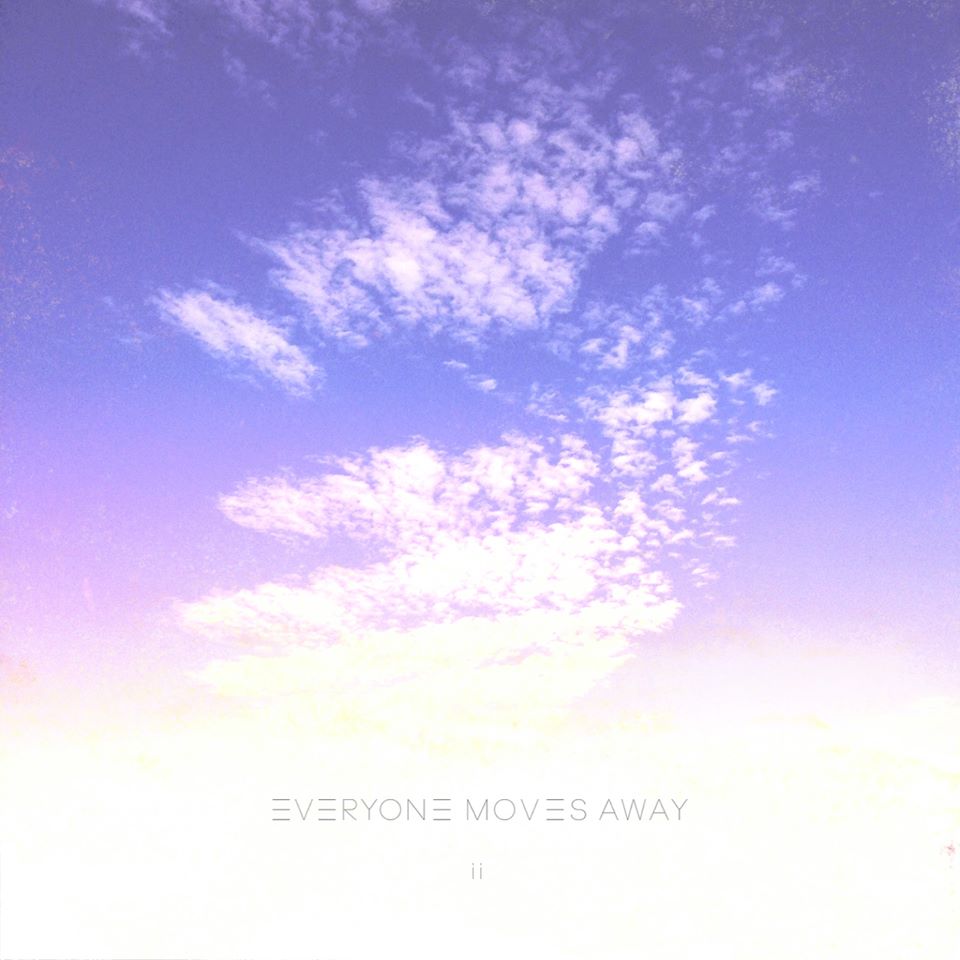
10481858_298121743700397_3975414626893827198_nIn a clever turn, the music group Everyone Moves Away printed on their Facebook band page a rather revealing insight into what makes their music speak so beautifully and effortlessly to the humanity in all of us. For the “Location” section on their profile, they simply put: Earth.

This pithy statement speaks to the vast range of human experience and cosmic potential that EMA seeks to capture in the electric, near interstellar depth of their music. A few months ago, I had the opportunity to write a review of their first EP, titled I, in which I said the following:

“Hailing from the Music City itself, Nashville-based Everyone Moves Away is taking quite a unique approach to capturing the powerful and transcendent effect of music on each of us. Founded by music producers and writers of diverse backgrounds and projects, EMA represents the kaleidoscopic effect of varying styles and experiences blending into a unified, storytelling voice. […] The heart of EMA lies in the atmospheric, almost cinematic beauty of their music, a thrilling combination of lucid guitar phrases, sweeping ambient tones, electronica, and anthemic choruses that highlight frontman Chris Small’s soulful, yet melancholy vocals . In their debut EP I, EMA fluidly moves from the hauntingly-lovely dream quality of “East Lights” to the wild blood of the ever-hopeful “We’re Only Getting Closer.” Steeped in the natural harmony between music and memory, Everyone Moves Away explores what is most true and most raw to the depths of human experience.”

Now, I’d like to take the occasion to conduct a brief exploration of their most recent work, aptly titled II. For all the overwhelming intensity and spirit evident in their freshman project, II delivers power and feeling that only furthers the band’s firm command over musical and poetic effort.

  1. “Waiting for Futures” – The EP opens on an almost dizzying array of atmospheric sound, pulsating in and out to introduce the tone of the whole album. In effect, we are invited into a spiritual space, a devoted study of hope and melancholy that escalates dramatically as Chris Small, the frontman, lyrically unravels the beautiful chorus: “All we have is falling / What are you waiting for?” With this incredible opener, EMA shares the emotional richness of wistful yearning and passionate feeling, captured in a brief, yet moving lyric. A personal favorite. 
  2. “Collide” – A more pop, upbeat number, “Collide” takes the heart of the first track and transmutes it to a young, anthemic dance hit. Yet, for the stark contrast, the music doesn’t lose its sense of continuity. The song’s primary focus is on the steady beat as the guitars and Small’s vocals soar over the march, quite an artful choice to combine a pounding rhythm with lofty, elongated lyrical phrases.
  3. “The Pale Star” – The shortest track on the record, this song distills the solemn and pensive moments of EMA’s sound and creates a small but lovely “miniature epic.” To the film reel of II, “The Pale Star” is a simple snapshot, a moment.
  4. “With the Night” – Considering the full force and broad appeal of the song, “With the Night” seems to open with a sort of false start, a promise that the track will deliver a slow and soothing ballad as Small calmly drifts through the verse. Then, all promises break as he calls out to herald the chorus and the drums respond: “So what do we whisper now? / I can tell we’ve lost control / The sun is going down on us / We’ve never found ourselves so sure / Love is lost with the night”. Featuring a spoken-word piece (delivered by Small) during the bridge, “With the Night” is perhaps EMA’s most eclectic and surprising track to date.
  5. “Hollywood” – Seemingly a second-act to “Collide”, “Hollywood” starts right off the bat with vocals, drums, and a modulating bass synth, mingling to create a walking rhythm (get your earbuds and get moving!). The ambience and startling digital effects throughout the track make “Hollywood” an addicting, attractive pop wonder, perhaps underscored by Small’s haunting lyrics: “Everything is fantasy […] Our nights playing on a movie screen […] Will you dance with me one more time? One more time?”
  6. “A Lone Spark” – Another shorter track, “A Lone Spark” combines cloudy and foggy swells with a punctuated single note repeated like a dotted line as Small’s vocals fade in and out of transmission. Darker in tone and somber in effect, “Spark” brings us to the end, reminding us of the pain and loneliness of exile only to prepare us for the glory of home in their best track “Everything”…
  7. “Everything”  – “Everything with my eyes closed / I can see you come alive / And with our eyes closed / I can feel the sun” So concludes the beautiful quest. Small has led us through dream and memory, futures and sparks, and here we experience a wondrous resurrection as we “come alive” through the power and transcendence of music: “When we wake, we aren’t the same / Are we a dream inside the sky? / And everything that we can see is everything close to me”. The final phase of the song, and indeed the endnote of the record, is a glorious bursting forth of voices and instruments, electric and vibrant, loudly pulsing to a close as we are left singing along, with our own eyes closed, fully alive.

Everyone Moves Away’s music can be found on iTunes, Spotify, and on their website.

EMA is comprised of Chris Small (vocals, guitar, keys), Melissa Mattey (keys, vocals), and Tony High (keys, drums, percussion).

2014_06_ema

Awake, O Sleeper!

jon-huff-let-the-nations-be-glad-epJust a few weeks ago, my brother Jon Huff released a 4-song EP entitled Let the Nations Be Glad. This project focuses particularly on his various trips to the Middle East and the prayers he offered to God concerning the work of the church in reaching the lost.

Yet, this project has been in the making for over a decade. Let me explain.

My brother picked up the guitar in high school and has never really put it down since. It’s no wonder; he is a brilliant musician, writing and playing beautiful songs as if magic worked his hands. He plays effortlessly, singing and making music for the Lord like David. I’ve always admired him for this talent and have long considered him a true gift from God, both as a brother and a friend.

Many people over the next several years longed for an official recording, an album that demonstrated his incredible knack for songwriting. Though opportunities arose, the prospect never really felt right, and Jon kept the thought of recording at bay. Until now. This EP represents Jon’s heart to honor Christ through the gift he’d been given, to bless God through the blessing of music.

When I first heard these songs, I decided to write a poem that corresponded to the overall message of the album. It is called “Awake, O Sleeper”, and I’ve included it here:

“Awake, O Sleeper”

Awake, O sleeper!

And listen to the psalms of a thousand tongues, unstung

By the healing balms of grace,

Singing harmonies louder than water,

A choir formed from the global spectrum of faces,

The spirit of salvation pouring forth from the nations.

Awake, O sleeper!

Taste and see the feast of Jesus

Spread in bounty for His glory,

The smiles of the least of these at the table,

The multi-colored coats on multi-colored bodies,

Dressing the kaleidoscope of the church in all her beauty

From the reddest clay of Africa to the greens of Galilee,

The puzzle pieces of continents brought to their knees by rivers and trees,

Cheeks filled as they breathe the glorious name of Jesus in praise.

Awake, O sleeper!

And hear the voice of one crying in the wilderness,

Preparing the way of the Lord to the deserts,

Prophets in robes, suits, ties, and t-shirts,

Declaring the gospel like doctors in hospitals,

Shouting and pointing to the God that raises the dead,

Who ceases all deceasing and brings breath to the choking,

Gives song to the broken and ear to the spoken prayers of His people.

Awake, O sleeper!

And sound the alarm! Stretch out your arm

To give help to the helpless,

To build homes for the orphans and make churches from stones

‘Til the valley of dry bones is sewn together

With the thread of the blood red tether of God, the gift of His Son

Who shed rivers of grace to pull us back to the embrace of the Giver.

Awake, O sleeper. Awake.

The Poetry of God

downloadIn Ephesians 2, Paul declares that we as Christians are the “workmanship of God”:
“For we are his workmanship, created in Christ Jesus for good works, which God prepared beforehand, that we should walk in them” (Eph. 2:10).

Interestingly, just a verse earlier, Paul reminds us of the sobering reality that we are saved by grace through the gift of faith, not the strength of our own theological prowess or pull-myself-up-by-my-bootstraps, “can-do” optimism. There is no amount of self-help literature, meditative yoga, or American patriotism that can yank us out of the muck of our depravity. We are just plain sunk. Apart from him I can do nothing (John 15:5).

So how are we to read this declaration that we are God’s workmanship? If all the good in us comes from grace, what does this identity mean? Are we valuable? As Joe Rigney once said, “I know God loves me, but does He like me?”

It’s notable that the Greek word rendered as “workmanship” here in Ephesians is poiema, from which we can clearly see our English word poem. When Paul encourages the church at Ephesus that they are “God’s poiema” created “in Christ Jesus”, we must recall what the Apostle John called Christ at the beginning of his gospel: the Word (“In the beginning was the Word…“).

So, quite truly and wondrously, we are the poetry of God created by the Word of God. We are His poiema created in Christ Jesus for good works. One cannot help but remember the glorious image of the great lion Aslan, singing all of Narnia into existence, creating from nothing the majestic symphony of space, the living splash of Nature’s color, the taste of golden water and the scent of purple skylines. All of creation, with man and woman as its crown jewels, is woven together into a grand and passionately wild poem by the even grander and wilder God who penned it. The ink of God’s poetic effort is the living and breathing dreams and glories of man. We are God’s poiema created in Christ Jesus. Majesty upon majesty.

As David wrote in Psalm 19:

The heavens declare the glory of God,
    and the sky above proclaims his handiwork.
Day to day pours out speech,
    and night to night reveals knowledge.
There is no speech, nor are there words,
    whose voice is not heard.
Their voice goes out through all the earth,
    and their words to the end of the world.
In them he has set a tent for the sun,
which comes out like a bridegroom leaving his chamber,
    and, like a strong man, runs its course with joy.”

The poetry of God flames out through all the earth. Observe the fullness of His glory as it is declared in this passage: the sun comes out like a bridegroom, coming for his bride, running his course with joy. Every sunrise, then, is a beautiful picture of the Great Bridegroom pursuing His bride down the cosmic aisle of the skies and clouds, chasing after her well into the night (as every groom ought).

As Victorian poet Gerard Manly Hopkins puts it:

“The world is charged with the grandeur of God / It will flame out like shining from shook foil”

All of creation is charged with God’s grandeur, an electric livewire coursing deep into our veins. We are not a dull, lifeless poem, stuck in the pages of a bedraggled, spine-torn anthology in my English classroom. We are a living, spoken, adrenaline-pumping poem uttered by the very breath of God. We are His workmanship, His craft, the diamonds carved from coal, man from dust, woman from bone.

So, yes. God likes us. We are His poem. God passionately pursues us and love us because we are crafted by His hands and His Word, made in His very image. We are the clay of a dedicated, careful Potter. We are the rhymes and notes of a marvelous Poet. We are His workmanship, created in Christ Jesus. May we learn to live this way.

As Doug Wilson once noted, it is no wonder the first recorded words of human history were poetry: “This at last is bone of my bones and flesh of my flesh” (Gen. 2:23).

Five Influential Writers in My Life

As I am working to lift Eden.Babel onto its feet, one of my primary concerns and interests is in the field of wordsmithing. Excellent craftsmanship is a noble goal, no matter what the smithy of your particular ilk is filled with; the mason may use bricks, the painter his brushes, the musician his notes. The writer uses words. Since the usage of words is a staple of most people’s daily living, the writer has a peculiarly interesting challenge before him. Not everyone uses paint or notes or bricks in the course of their 24 hours, but we almost all use words. Some may wish others used fewer, but that’s another post. Writers are tasked to take a seemingly mundane feature of our existence (words and their arrangement) and spin them in such a way that they can knock a hearer off his or her feet. As Mary, Queen of Scots once said of John Knox, “I fear his tongue and pen more than the armies of England.”

As I have immersed myself over the years in the world of literature, poetry, and many other forms of the written word as well as committed myself to the weaving of my own words, I have decided to consider five of the most influential writers in my own life. This list, as with most lists of its kind, is written in the current moment, meaning I am quite available to be moved and impacted by other writers than these five in the future just as I certainly have been in the past. Also, this list does not factor in God and His Word, the most influential book ever written. As a Christian, I heartily affirm the influence of the Word of God to be a given.

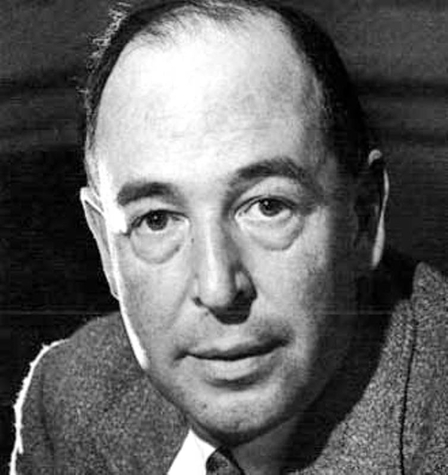
5. C.S. Lewis

cs lewis

This choice really stems from how much of Lewis I have read over the past ten or so years. As a child, I was raised on the Narnia stories and have just recently started to go back through them. I was likewise raised on the BBC films of the Narnia books (you know, the Lucy with her wonderful teeth, the giant beavers, the animatronic Aslan. Classics…). As I moved into college, I began to wade through more of Lewis’ work, including The Great Divorce, Till We Have FacesThe Screwtape Letters, and others. During a bleaker period, I picked up A Grief Observed, which was very helpful. Finally, while studying literature in grad school, I took a course on Lewis and Tolkien in London. There, I dove headlong into his space trilogy, The Four LovesThe Weight of Glory, and a great deal of his biography. Since then, I’ve read Surprised by Joy, a number of his poems, and continue to read him more and more. His commitment to both logic and fancy is contagious, and I look to him for an abundance of insight and imagination.

Recommended readingOut of the Silent PlanetThe Voyage of the Dawn TreaderThe Screwtape Letters, “The Future of Forestry”, “Meditation in a Toolshed”

4. Billy Collins

Billy-Collins

In compiling this list, I made an effort to select writers that represent different genres and approaches. With this in mind, Collins is certainly my poetic choice. He served as poet laureate for the U.S. in the early 2000s, and I even had the privilege of meeting him at a poetry reading in Nashville. Collins’ poetry is known for its accessibility, humor, and seeming simplicity. For this, he may certainly be termed a poet of the people. Yet, his writing is elusive, deep, biting, startling, and some of the most moving verse I’ve encountered. Collins has the unique ability to take a simple reality (weighing a dog, weaving a lanyard at camp, studying geography) and transform it into a transcendent experience as he observes the fullness of feeling, sensitivity, and power that can exist in any given human moment. He treats love, loss, friendship, fear, and longing as though they are old pals, conversing freely with them over coffee at midnight. He laughs through awkwardness and shudders at morning light. He can turn any event on its head at the start of a single stanza and leave you breathless upon completing it. I cannot speak highly enough of his work, and I have thoroughly enjoyed making my way through his collections.

Recommended reading: “The Lanyard”, “Weighing the Dog”, “Introduction to Poetry”, “Plight of the Troubadour”

3. Ben Gibbard

gibbard-colbert

Though he is primarily regarded as a musician, Gibbard’s lyric writing ranks right up there with the best of them. He is the frontman for the indie rock band Death Cab for Cutie and has become a respected voice for poetic melancholy in our generation. I caught on to Ben Gibbard’s beautiful writing when I was first introduced to DCFC’s album Transatlanticism by my little brother, Chris. I remember being immediately struck by the quality of their music and Gibbard’s soaring melodies, so I decided to go through the whole album several times over on my own. What I discovered as I walked alongside his verses and choruses, acutely attuned to the narratives he was singing, was simply breathtaking. I was speechless. Gibbard could weave a lyrical phrase unlike anyone I had ever heard, and what had ignited a glimmering flame of attraction and sympathy for him in Transatlanticism was fueled to a wildfire in Plans, their 2005 album. By this time, I had begun playing music myself with a friend of mine and had become interested in lyric writing as a form of expression not dissimilar from poetry. As I delved further into writing music and writing lyrics, Gibbard always served as the standard, the pitch in which all of my own writing was set. To this day, I look to Ben Gibbard’s poetic sensibility, astounding mastery of metaphorical language, and sobering emotional melancholy for a bracing dose of creative power to shock me back into my own love and passion for writing.

Recommended reading/listening: “What Sarah Said”, “Brothers on a Hotel Bed”, “Little Wanderer”, “Transatlanticism”, “We Looked Like Giants”, “Title and Registration”, “Summer Skin”, “No Room in Frame”

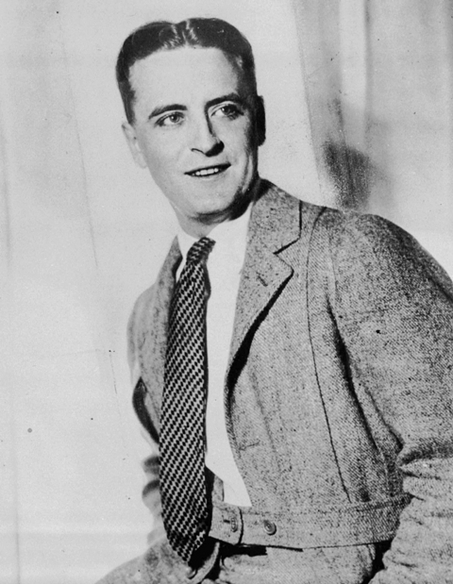
2. F. Scott Fitzgerald

f-scott-fitzgerald

If you are reading this and you are a former/current student of mine, you saw this coming; I tend to reference Fitzgerald all the time in class. Simply put, there will never be another F. Scott Fitzgerald. I dedicated my master’s thesis to the life and work of this marvelous author, so I am quite biased. I do believe, however, that his prophetic understanding of American narcissism, the nature of sin, the transience of happiness, and the ache of unrequited love have cemented him in literary history as a true icon of the highest caliber. He was painfully romantic, given over at once to both the beauty and the hopelessness of his dreams. He desired a greatness that would always be two steps ahead of him, doubting his ability to reach it yet straining forward all his life. He was exuberantly happy and painfully miserable. He rose meteorically and fell disastrously. He fought with God and embraced God. He could dash off a crowd-pleaser in a matter of hours (often hungover) and labor meticulously over a failing novel for years. And his writing is simply magnificent. Every page of his work is filled with both diamonds and dust, champagne and charlatans. He wrote like Mozart, lyrically effusing phrases and sentences that seemed like they had been written ages ago as he simply pulled them out of the air and blotted them on paper. He wrote like most men breathe, pouring forth what was already in there, effortlessly. Much of my love for the imaginative wonder and hope in life is credited to his work. I will read him until I can no longer read.

Recommended readingThe Great GatsbyThis Side of Paradise, “‘The Sensible Thing'”, “Thank You for the Light”, “The Cut-Glass Bowl”, “The Jelly-Bean”

1. Doug Wilson

Doug-Wilson

Doug Wilson is a theologian, pastor, and highly prolific writer with dozens of books to his name. If there is any writer who has helped shape my thinking, provoke my curiosity, satisfy my imaginative scope, push my pursuit of excellence, hone my understanding of joy, and confirm my desire for the full, abundant, passionate life in Christ, Doug Wilson is that writer. His work ranges greatly, covering such topics as culture, theology, rhetoric, argument, marriage, childrearing, father hunger, eschatology, apologetics, creative writing, Beowulf, wisdom, the Middle Ages, hearty laughter, Calvinism, gratitude, poetry, robust singing, and much more. His writing has led me deeper into the conviction that God is God and God is good. I am so deeply indebted to his writing and his teachings on the Christian life that to remove his influence from my life would be to remove a great deal of who I have become in my faith in Jesus. While the content of his work is overwhelmingly edifying and helpful, his style is simply inimitable. He wields the English language like a battle axe, sharp at the edge and effective in every blow. He is clever, witty, incisive, kind, colorful, lyrical, and quotable. He is memorable, humorous, startling, paradoxical, and charming. He is jolly and forthright. He is happy and rigid. In a word, he is full. My admiration and respect for Wilson’s writing cannot be expressed enough, and I could speak at greater and greater lengths in praise of his command over the written word.

Recommended readingHeaven MisplacedAngels in the ArchitectureRules for ReformersJoy at the End of the TetherWordsmithy, God Is

Making the Bed

I wrote this poem after a futile attempt I made to try to change the sheets on our bed while my wife was out of town. I worked diligently to fit the elastic sheet on our queen-size mattress for quite some time only to realize I was holding a twin-size sheet. I began to wonder how widowers make their beds without wives to guide them…

Our fingertips danced once

As we walked them along the edges of our mattress,

Calling out to each other with the strength

Of smiling eyes, crossing

The queen-sized canyon to hold each other’s glances.

You carefully studied the measured lines

(and I carefully studied yours) as

We fitted the sheets to our new bed,

Working to weave our souls into the cool linen.

Our laughs soared as we

Ballooned the top sheet into space

And hushed to join the quiet whisper as it

Exhaled into bed like a cloud drifting in the water.

Then

We collapsed in symmetry

Like stars,

Gliding into a forever of sleep and wakefulness,

Circling the clock.

And, next to you, I prayed, only

For more clocks.

For now I can taste the stale grime of

Central heat

Breathing through the ribcage of rusted vents

And stretch my cracked knuckles across the

Bare-boned cold of our bed,

Pulling a twin sheet with all my heart

You would know why it doesn’t fit

And how I am afraid

To join the quiet whisper as I

Exhale into bed,

A cloud without its water.