 I am working my way through Fyodor Dostoevsky’s Crime and Punishment and was struck by one of its early scenes depicting a drunkard in a St. Petersburg tavern bemoaning his vices, as well as the costs they have accumulated, to the novel’s protagonist Rodya Raskolnikov.
To set the scene, Marmeladov is a sickly alcoholic who has drowned himself beyond the breaking point in his sins. With each vain attempt at repentance, Marmeladov, like a dog to his vomit, returns again and again to his excesses, much to the despair and fury of his long-suffering wife and children. In fact, Marmeladov mumbles to Raskolnikov that his drinking has even pushed his daughter Sonya into prostitution to keep the family above water while he lurches night after night down the old steps into the dingy bar.
In his extensive monologue, Marmeladov admits his depravity and the egregious consequences it is creating, yet he feels compelled to linger in his darkness, a tension that pits sin and redemption on opposite ends of the same locked door of the heart, thus foreshadowing Raskolnikov’s own division as he crouches behind the door of the old pawnbroker moments before her murder.
By the end of his rambling speech, however, Marmeladov rises to a momentous occasion in which he declares he “ought to be crucified” and judged rightly for his wickedness. He even tells the bartender: “Do you suppose, you that sell, that this pint of yours has been sweet to me? It was tribulation I sought at the bottom of it, tears and tribulation, and I have found it, and I have tasted it.” Here, Marmeladov has reached the nadir of his troubles and has realized his inability to see joy, redemption, or hope in his bottomless search; neither in beer nor the tears it draws can salvation be found.
At the climax of his speech, Marmeladov looks forward to the final judgment of Christ in which all will be exposed and all will be made right. Read the beauty of his plea:
“And He will say, ‘Come to me! I have already forgiven thee once…Thy sins which are many are forgiven thee for thou hast loved much’ […] And when He has done with all of them, then He will summon us. ‘You too come forth,’ He will say, ‘Come forth ye drunkards, come forth, ye weak ones, come forth, ye children of shame!’ […] And the wise ones and those of understanding will say, ‘Oh Lord, why dost Thou receive these men?’ And He will say, ‘This is why I receive them, oh ye wise, this is why I receive them, oh ye of understanding, that not one of them believed himself to be worthy of this.'”
Few moments in literature parallel with this piercing declaration of hope in the face of hollow living. Marmeladov, for all his sinfulness and despair, preaches the gospel in a dim-lit corner of a Russian pub. He has vainly sought peace in his drink and in his darkness, yet he discovers that it is in such darkness that illumination may rise. The voice of Christ beckoning all who are weary, all who are broken, all who are drunken to rise, like Lazarus, and come forth into the light is one of the most beautiful pictures Dostoevsky imagines, and he seats it right in the opening of a harrowing novel full of shadow and fear. It is perhaps no wonder his original title for the book was The Drunkards, for that is what every character, in his soul, is. And since Hamlet was right in declaring all art to “hold a mirror up to nature” and expose our own innermost realities, we as readers instantly recognize our own spiritual drunkenness, our own Marmeladovian depravity. Therefore, as Raskolnikov begins his own plummeting spiral over the rest of the novel, we too are caught in the plunge, equally complicit in the powers of darkness that await the resurrecting call of Christ. We too are drunkards, and our only salvation will come from the belief that we are unworthy of it.
Like Jean Valjean’s defining moment of forgiveness from the bishop in Les Miserables, Marmeladov faces the depths of his own sin in the light of Christ’s glory and grace. It is not in the rack of guilt or the metallic strictness of the law that such men hear God but in the beautiful touch of pity and grace. Like Valjean, Marmeladov sees, though ethereally, the mercy of God extended even to him, and struck to the bone, he seeks the light of redemption. Like Valjean, he is brought to a full understanding of his wickedness, and there, only there, may he see the extended hand of God lifting him up. And so in reading such masterpieces, may we also be brought to the pits of our own sin, may we also see our offenses for what they are, so that we may be forgiven, shown grace, and restored to our full humanity. May we drunkards hear the call to quit the shadows and ascend from the grave into the marvelous light of God.
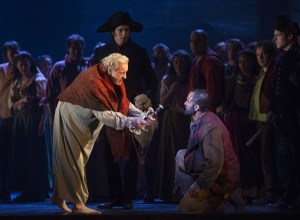 At the end of Les Misérables, as Jean Valjean lies dying before his beloved daughter Cosette and her husband-to-be Marius, the musical swells to a beautiful arrangement of different musical themes sung by Valjean, a vision of Fantine, and reprising his earlier role, the Bishop of Digne. In this stirring scene, Valjean commends Marius and Cosette to marry and reveals his long-held secret that he, in fact, is prisoner #24601, tired from a life of running from the law. As Valjean sings his last confession, Fantine appears to welcome him into heaven, accompanying his reflection on the grace he has been shown and his attempt to live a life worthy of it. At last, Valjean sees the Bishop, the noble priest who initiated the entirety of Valjean’s redemption by welcoming him to his home, forgiving his crime, and graciously setting him free, transforming him into a new man whose soul has been “bought for God”. Notice the kindness and sacrificial love of the priest as he gives Valjean the candlesticks at the beginning of the musical:
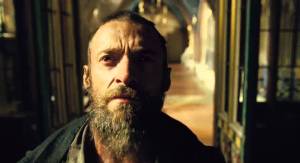 No statement better captures the spiritual center of the story as Valjean fully takes the measure of how strong grace truly is. One simple act of kindness, unmerited yet fully proffered, has the power to transform a filthy sinner into a forgiven saint. Even in his humble and lowly position, the priest became a vessel for Valjean and, by extension, the audience to see the very face of God through his indefinable love for an embittered thief.
 It is often said that in the land of the blind, the one-eyed man is king. Yet, what must be said of the two-eyed man?
 The inescapable truth of life is in its ending. By no means do I wish to sound morose or despondent, but it is the truth nonetheless. Part of the universal human experience is aging, the bittersweet feel of birthday after birthday as we watch that person in the mirror change on us. With every passing moment, we are collectively growing older. Unfortunately, Barrie’s play is fictional, and Neverland will always be just a little farther past our fingertips.
 In an age of rampant cynicism, intense narcissism, and deep defiance toward absolutes such as truth, goodness, and beauty, the ache for passionate and rich festivity must burn ever more feverishly in our hearts. This sour world, lost in the mirrors of its vanity and drowning in the white noise of feeds, posts, snaps, and late-night binges, is in dire need of a good feast, what Tolkien saw as an evening by the fire, filled with boisterous laughter and great dancing. Or, as Lewis saw, what greater way to herald the breaking of winter than the carousing of creatures at the coming of spring? The promise of resurrection is a great promise, full and strong, breaking like the tide against this screen-drunk land.
 As my classes this year begin to wind down, I find myself making frequent glances in the rearview mirror, looking back at all the worlds I have led my students through. From the electric streetlights of New York to the vast acreage of the Russian countryside, from the courts of Denmark to the Paris Opera House, the wintry streets of Victorian London to the cramped apartment of a desperate salesman*, I am taken aback by the sheer beauty and splendor afforded in the simple pleasure of reading books.
 I am sure with a
  Eden.Babel