This is a poem dedicated to my daughter Julianna, the girl who says hello to the thunder:
My daughter speaks with thunder,
Letting go of a thousand wishes drawn from her little well,
Lips stirred by the sweeping spells of starlight,
A congregation of electric clouds clapping the chorus,
Humming hymns.
When lightning rips the violet sky,
Like mice scratching faster than traps,
Cheese in cheek,
My child betrays her young lungs with the fragile yell
Of determined humans,
Daring to harmonize with the heavens.
She smiles and dances to me,
The harps in her throat still laughing with song,
When her hands outstretch to unveil
A dozen little berries,
Dizzy from the sugar they’ve drunk,
And I see the glory of this gummy communion,
As my daughter chomps on her backyard treasure,
Barrels her hellos to the evening,
And God the Father belly laughs
A shower of rain in response.

 In light of a recent biography of William F. Buckley, Jr. I just finished, I’d like to share this tribute video to the sailing Yalie, the conservative Catholic, the ever charming, insatiably witty, fiercely prolific, and undeniably audacious voice of American conservatism. I owe great thanks to my father for introducing me to Buckley through clips of Firing Line.
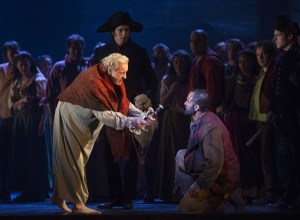 At the end of Les Misérables, as Jean Valjean lies dying before his beloved daughter Cosette and her husband-to-be Marius, the musical swells to a beautiful arrangement of different musical themes sung by Valjean, a vision of Fantine, and reprising his earlier role, the Bishop of Digne. In this stirring scene, Valjean commends Marius and Cosette to marry and reveals his long-held secret that he, in fact, is prisoner #24601, tired from a life of running from the law. As Valjean sings his last confession, Fantine appears to welcome him into heaven, accompanying his reflection on the grace he has been shown and his attempt to live a life worthy of it. At last, Valjean sees the Bishop, the noble priest who initiated the entirety of Valjean’s redemption by welcoming him to his home, forgiving his crime, and graciously setting him free, transforming him into a new man whose soul has been “bought for God”. Notice the kindness and sacrificial love of the priest as he gives Valjean the candlesticks at the beginning of the musical:
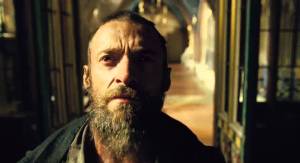 No statement better captures the spiritual center of the story as Valjean fully takes the measure of how strong grace truly is. One simple act of kindness, unmerited yet fully proffered, has the power to transform a filthy sinner into a forgiven saint. Even in his humble and lowly position, the priest became a vessel for Valjean and, by extension, the audience to see the very face of God through his indefinable love for an embittered thief.
 Eden.Babel